
Category: Compliance

What an Oracle Compliance Manager Could Mean for Your Business
Most operators believe they have a compliance program. Documents exist, registers are maintained, tasks are scheduled, and obligations are broadly understood. But beneath that surface, almost every PCBU carries the same quiet uncertainty: Is everything actually being done? Is anything slipping? Would this program withstand scrutiny if something went wrong? This is the gap between […]

The Oracle Advantage: Why Managed Compliance Is A Strategic Investment
You’ve known for a while that in the fast‑moving, heavily regulated Australian fuel industry, compliance is not a quiet back‑office function. It’s the backbone of operational confidence, brand protection, and long‑term profitability. Yet for many service station owners and network managers, compliance still feels like a maze with fragmented tasks, inconsistent record‑keeping, unclear regulatory updates, […]

Informed Consumer: What Makes a ‘Good’ Service Station? (It’s Not Just Price)
When most people choose where to fill up, the decision is usually made in seconds. A quick glance at the price board, maybe a comparison against the station across the road, and that’s enough to decide. It feels logical. Fuel is fuel, right?

The Hidden Compliance Shift: From ‘Checklists’ to ‘Proof of Control’
For years, compliance in the fuel industry has largely been treated as a checklist exercise. Tasks are completed, forms are signed, reports are filed, and the assumption is that the site is operating within requirements. For a long time, that approach seemed sufficient. If nothing went wrong and inspections were passed, there was little reason […]

Cleaner Fuel Standards Are Now in Force
On 15 December 2025, Australia quietly crossed a line it had been trailing behind for decades. New petrol quality standards officially came into force, bringing Australia closer to international fuel benchmarks and modern vehicle emissions technology. While the announcement itself was not dramatic, the operational and commercial implications are still unfolding and will continue to […]
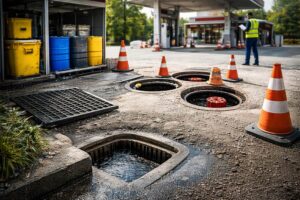
Environmental Compliance for Service Stations: What not to get wrong in 2026
In 2026, environmental compliance isn’t just about ticking boxes , it’s about proving your site can withstand regulator scrutiny as a whole system. One weak link can unravel your entire operation. Across Australia, many service station operators manage environmental compliance separately. Fuel systems are handled one way, waste is handled another and stormwater sits somewhere […]

SIRA Compliance in Australia: The Ultimate Guide for Fuel Site Owners in 2026
If you operate a fuel site in Australia, you’ve probably noticed one trend: SIRA is suddenly everywhere. Search volumes are climbing, regulators are tightening expectations, and more site owners are being asked to demonstrate accurate fuel reconciliation practices. The days of assuming your ATG will “pick up any issues” are long gone. Today, SIRA compliance […]

Worker-Compliance & Employment Law Risks at Service Stations
Fuel retail is more than pumps. It’s people, safety, and a full compliance ecosystem. Across Australia, more petrol outlets are being fined for employment law breaches than environmental ones. Underpayments, poor record-keeping, visa worker issues, and unsafe staffing practices are becoming the new front line of risk for fuel retailers, and most owners don’t see […]
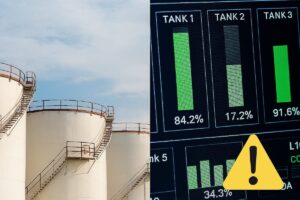
Fuel Security & Minimum Stockholding Obligations Defining 2026
As 2025 draws to a close, Australia’s fuel industry is entering a new era of compliance. The Minimum Stockholding Obligation (MSO), introduced under the Fuel Security Act 2021, is now fully operational, and regulators are signalling that enforcement will intensify in 2026. For service station operators, this is not a distant policy issue, it is […]

How Misrepresented Fuel Can Cost Operators More Than They Realise
ACCC enforcement is increasing and operators need to understand the real compliance risks behind signage, additives, and product claims. In the fuel-retail industry, most operators focus on the visible elements of compliance: pump accuracy, tank integrity, environmental monitoring, and safe operations on the forecourt. In focus currently is an increasingly scrutinised area – and one […]